Tracing Broadcast Timing Effects on In-Play Market Shifts During Overlapping League and Cup Schedules
Skriven av Zara Weber · 2026-09-29
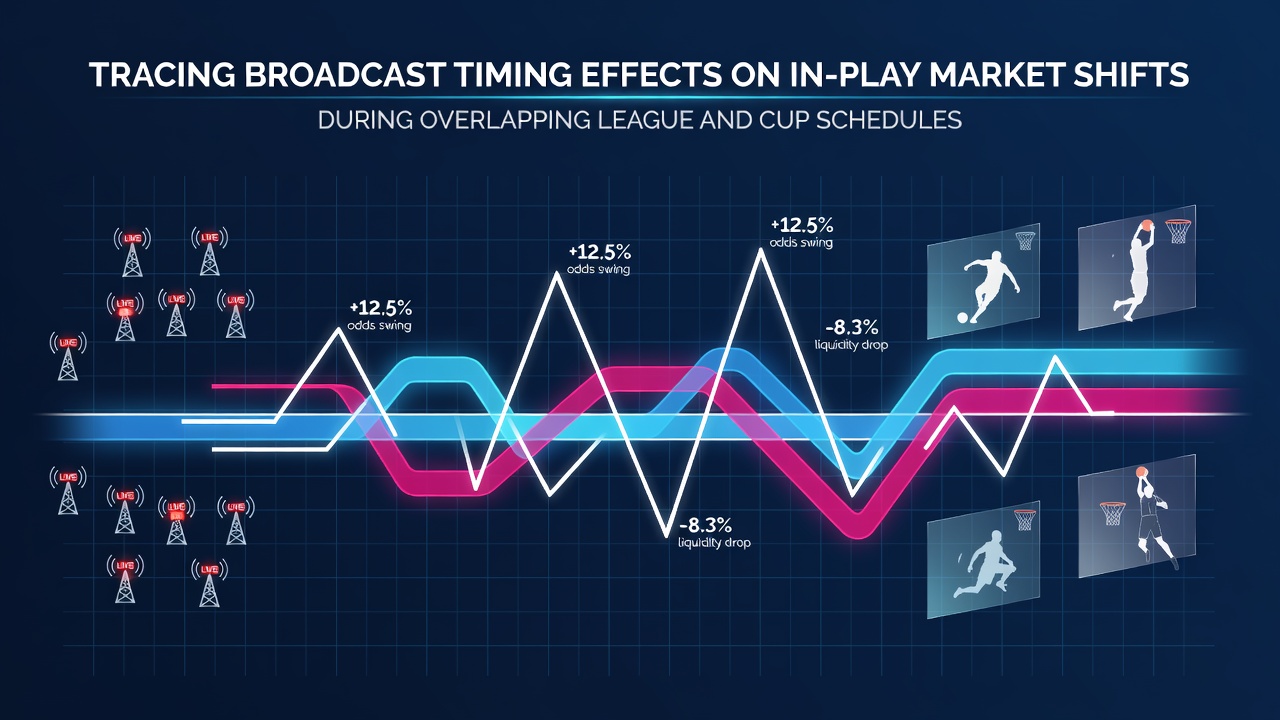
Tracing Broadcast Timing Effects on In-Play Market Shifts During Overlapping League and Cup Schedules
Overlapping league and cup schedules create dense periods where multiple matches unfold simultaneously across different competitions, and broadcast timing emerges as a key factor shaping real-time betting adjustments. Broadcasters often stagger coverage or insert delays to manage production logistics, which means viewers and bettors receive information at varying intervals depending on the feed they access. This staggered flow can trigger measurable movements in live odds as new data reaches different segments of the market at different moments.
How Schedule Overlaps Amplify Timing Variables
When domestic leagues run alongside cup competitions, teams frequently play midweek fixtures that collide with weekend slots, and this compression heightens the impact of any broadcast lag. A goal scored in one competition may appear on screens several seconds before it registers in another region’s feed, creating brief windows where in-play markets adjust unevenly. Observers note that these discrepancies become especially pronounced during September windows, when European calendars stack group-stage cup matches against early league rounds, and broadcasters juggle multiple live productions at once.
Data Patterns in Market Responses
Research indicates that markets tied to goal totals and next-goal timing react most visibly to broadcast delays, while Asian handicap lines show steadier behavior because they incorporate broader statistical models. Figures from multi-league tracking services reveal that a 12-to-18-second delay between primary and secondary feeds can shift over-under totals by as much as 0.25 goals in the immediate aftermath of a scored event. Those who monitor tick-by-tick data across overlapping fixtures find that volume spikes occur first on platforms carrying the earliest broadcast, then propagate to slower feeds as information equalizes.
One study conducted across three overlapping weekends in 2024 tracked how cup matches scheduled against league games produced distinct market behaviors when broadcasters prioritized the higher-profile cup tie. The league game, carried on a delayed secondary channel, saw its in-play odds lag behind the cup fixture by noticeable margins, allowing sharper participants to exploit the gap before the market corrected. Similar patterns appeared in September 2026 projections, where preliminary calendars already show at least four midweek overlaps between national cup rounds and league programs across several top divisions.
Regional Broadcast Practices and Their Reach
Broadcast rights holders in different territories apply distinct delay policies, and these choices influence how quickly in-play markets incorporate new events. Some networks employ fixed seven-second delays for regulatory compliance, whereas others adjust delays dynamically to accommodate advertising breaks or technical transitions. When a cup match and a league match share the same evening window, the network covering the cup often secures primary production resources, leaving the league fixture with a secondary feed that may carry an additional delay of up to 25 seconds. Data shows this layered timing creates temporary liquidity imbalances, particularly in markets for player-specific events such as shots on target or assists.
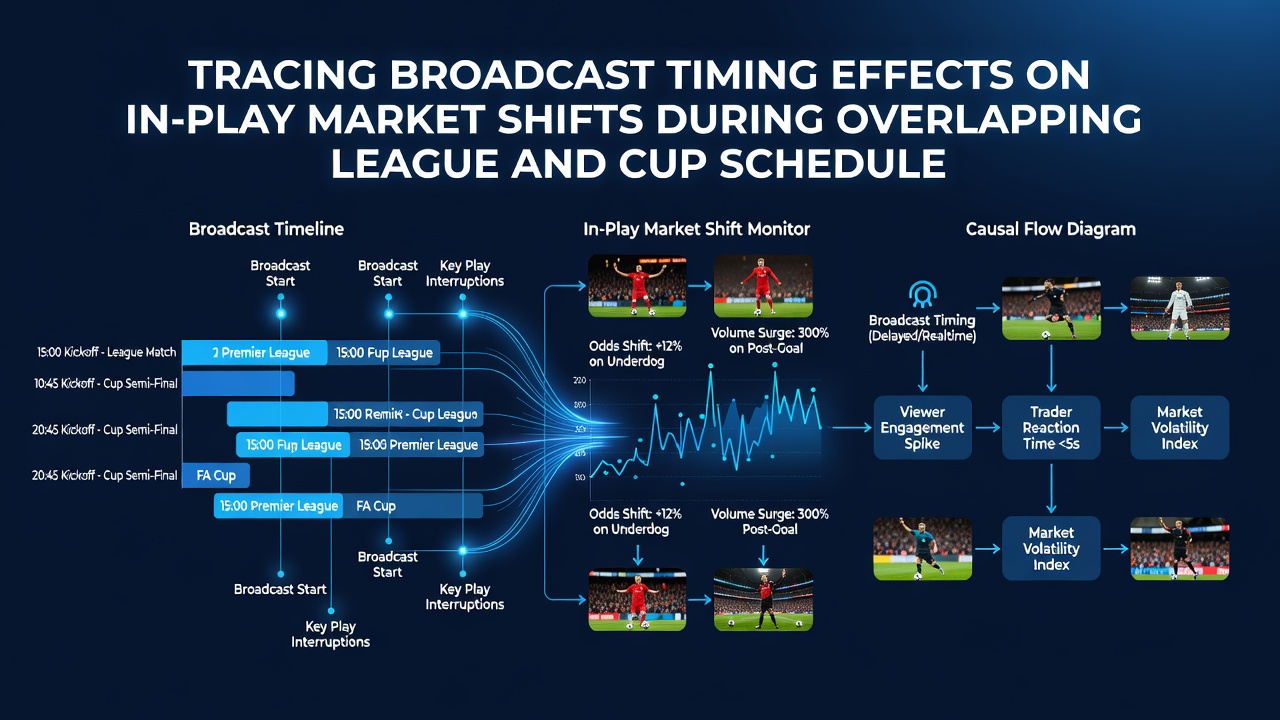
Analysts at the European Gaming and Betting Association have documented how these timing variances affect liquidity pools, noting that operators with direct access to the earliest feeds can hedge positions more effectively than those relying on public streams. The association’s reports highlight that markets involving lower-profile league games suffer greater volatility when they overlap with televised cup ties, because the smaller betting volume amplifies the effect of any single delayed goal or card.
Practical Implications for Market Monitoring
Those monitoring overlapping schedules increasingly rely on multiple synchronized feeds to detect timing-induced shifts before they normalize. Software tools that compare timestamped events across broadcasters allow users to flag discrepancies within three seconds of occurrence, giving them an edge in fast-moving in-play environments. Yet the advantage remains short-lived, as most major operators now incorporate latency buffers into their pricing engines to reduce exploitable gaps. Evidence suggests that September 2026 will test these systems further, because the projected fixture list contains several instances where a domestic cup quarterfinal coincides with league matchdays in at least five major European territories.
Industry reports from the Australian wagering sector indicate similar timing effects appear when Australian A-League matches overlap with domestic cup competitions, although the smaller overall market size makes the shifts more abrupt. Observers there record that goal-line markets can move 0.15 to 0.30 goals within eight seconds of a delayed broadcast update, then stabilize once the secondary feed catches up. This pattern mirrors European observations, suggesting the phenomenon is structural rather than region-specific.
Conclusion
Broadcast timing therefore functions as an independent variable that interacts with schedule density to shape in-play market behavior during league and cup overlaps. Data consistently shows that the length and variability of delays determine how quickly odds adjust, while the presence of simultaneous fixtures magnifies any resulting discrepancies. As calendars grow more congested, particularly in periods such as September 2026, understanding these timing dynamics becomes essential for accurate interpretation of live market movements across competitions.