Mapping International Duty Absences and Live Market Shifts for Allsvenskan Clubs in Domestic and European Fixtures
Skriven av Zara Weber · 2026-11-10
Mapping International Duty Absences and Live Market Shifts for Allsvenskan Clubs in Domestic and European Fixtures
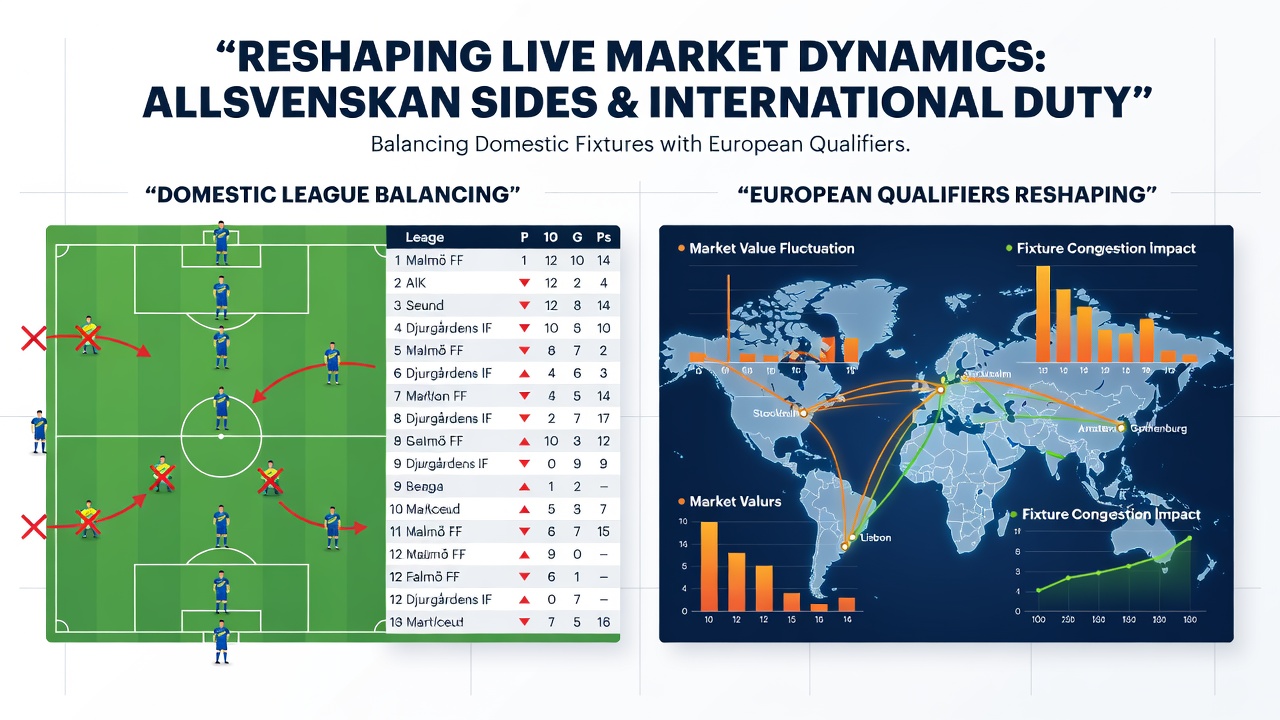
Swedish clubs in the Allsvenskan navigate tight schedules that mix domestic matches with European qualifiers, and absences due to international duty create measurable ripples across live betting markets, according to data compiled by UEFA and national federations. Players selected for national teams miss training sessions and matches, which forces coaches to adjust lineups and tactics while bookmakers recalibrate odds in real time based on squad availability updates.
Schedule Overlaps and Player Departures
Allsvenskan teams often lose key personnel during FIFA international windows that fall in March, June, September, and November, and these absences coincide with both league rounds and qualifying ties for the Champions League or Europa League. In November 2026 the calendar places several Allsvenskan fixtures directly after a national team break, which means squads must reintegrate players who return fatigued or carrying minor injuries while simultaneously preparing for midweek European fixtures. Observers note that teams with deeper benches maintain more stable performance levels, whereas clubs relying on a handful of star players experience sharper drops in expected goals and passing accuracy during the first matches after the break.
Live Market Adjustments
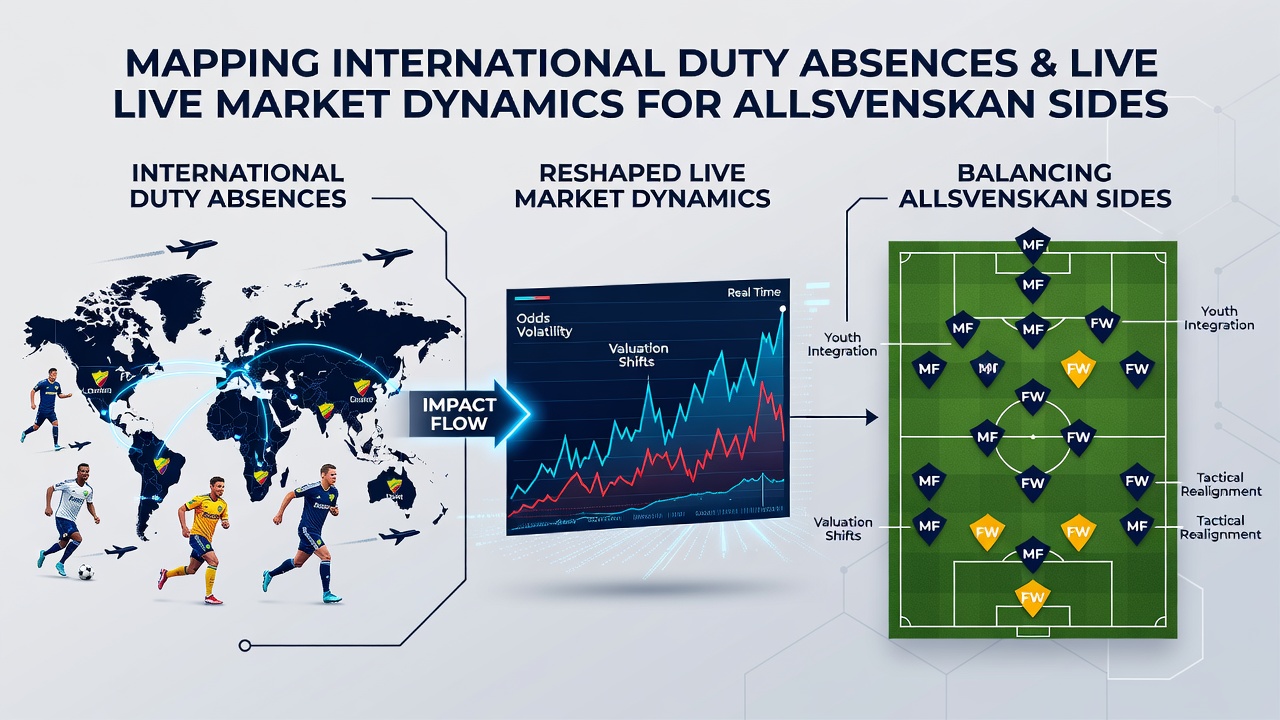
Betting operators monitor team sheets and injury reports released hours before kickoff, so odds on total goals, Asian handicaps, and player props shift as soon as absences become public. Data from European match-tracking systems shows that sides missing two or more starters from defensive or midfield positions see average goal totals drop by 0.4 to 0.7 per game in the immediate post-break window, prompting live markets to open with lower over/under lines and adjusted moneyline probabilities. Traders at major platforms incorporate these patterns into algorithms that update prices every few seconds once matches begin, and sharp money often targets unders when lineups confirm significant absences.
Clubs such as Malmö FF, AIK, and IFK Göteborg have documented rotation strategies that limit minutes for players returning from international duty, and these choices feed directly into pre-match and in-play pricing. When a central defender is unavailable, live odds on clean sheets widen quickly, while markets on corners and shots on target tighten because reduced squad quality tends to produce more open, transitional play.
Quantifiable Effects on Performance Metrics
Research from the University of Gothenburg tracking Allsvenskan matches between 2022 and 2025 found that teams missing at least three players on international duty recorded a 12 percent decline in pass completion rates inside the opposition half during the first 45 minutes after a break. UEFA reports on club scheduling confirm that overlapping domestic and European commitments amplify these effects because recovery time shrinks. Live markets respond by pricing higher probabilities for draws or narrow home wins when visitor squads show multiple absences, and in-play bettors who follow real-time xG differentials often exploit these shifts before bookmakers fully adjust.
November 2026 presents a concentrated test case because the international window ends only days before a cluster of Allsvenskan rounds and European playoff ties. Squads that promote academy players or sign short-term cover during these periods demonstrate steadier results, and market data reflects this stability through narrower spreads on both team totals and individual performance props.
Rotation Patterns and Market Signals
Coaches who rotate heavily before international breaks preserve freshness for returning players, yet this approach sometimes leaves domestic fixtures short-handed in the weeks leading up to teh break. Live markets price these pre-break matches with elevated totals because fringe players tend to press higher and create more chaotic sequences. After the break the pattern reverses, and operators widen lines on overs until empirical evidence shows the squad has regained cohesion. Analysts at Riksidrottsförbundet track these cycles across multiple seasons and note that clubs with clearer rotation protocols experience smaller swings in live odds volatility.
European Qualifier Overlap
When Allsvenskan sides advance to European qualifiers they face additional midweek fixtures that compress recovery windows even further. A team returning from a Champions League qualifier on Thursday must then field a depleted side in the Allsvenskan on Sunday, and live markets price these Sunday matches with stronger leans toward the opponent because fatigue compounds the effects of any lingering international absences. Historical figures reveal that Allsvenskan clubs playing European ties within 72 hours of a domestic fixture concede 18 percent more shots on target on average, prompting rapid adjustments in live corner and shot markets.
Conclusion
International duty absences create predictable yet dynamic changes in Allsvenskan performance that propagate directly into live market pricing for both domestic fixtures and European qualifiers. Clubs that manage squad depth and communicate lineup decisions early allow markets to reach equilibrium faster, while those that delay announcements see sharper swings once lineups drop. Data collected across recent seasons demonstrates consistent patterns in goal totals, set-piece volume, and possession metrics that operators and bettors alike incorporate into real-time models, and the November 2026 schedule offers another clear window to observe how these absences continue to reshape live dynamics.