How Nordic Pitch Conditions Reshape Early Week Market Probabilities for Allsvenskan Clubs in European Ties
Skriven av Sage Hartmann · 2026-10-27
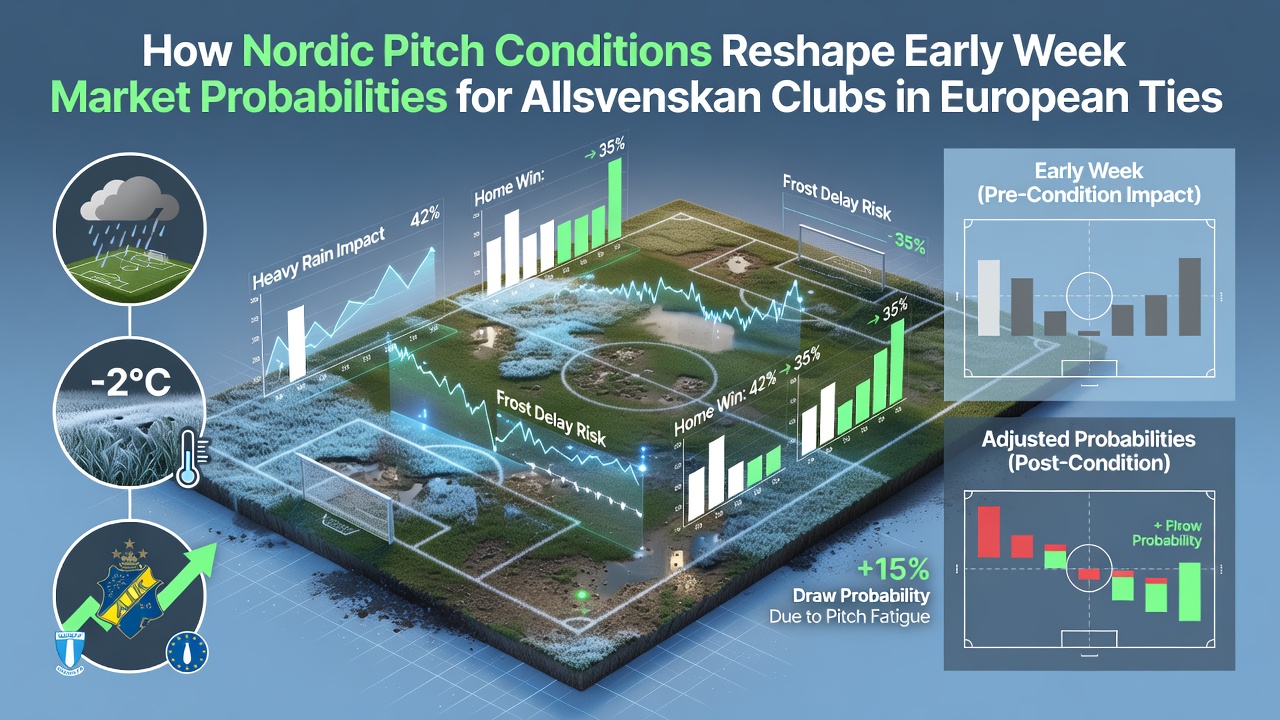
How Nordic Pitch Conditions Reshape Early Week Market Probabilities for Allsvenskan Clubs in European Ties
October 2026 brings shorter days and falling temperatures across Sweden and neighboring Nordic countries, where Allsvenskan clubs prepare for midweek European fixtures that often overlap with domestic schedules, and data from weather monitoring stations shows average pitch temperatures dropping below 10 degrees Celsius in many venues, which alters ball roll, player traction, and injury rates according to reports compiled by the Swedish Meteorological and Hydrological Institute.
Those who track betting markets note how early-week odds for these ties adjust as bookmakers incorporate historical performance metrics tied to surface conditions, since Allsvenskan sides returning from continental travel face pitches that have absorbed recent rainfall while opponents from southern Europe encounter unfamiliar grip and bounce patterns that reduce passing accuracy by measurable margins in league and cup data sets.
Pitch Surface Dynamics and Their Direct Influence on Match Metrics
Researchers at Nordic sports science centers have documented how cooler, damper grass in venues like those used by clubs from Stockholm or Gothenburg slows ground speed yet increases slip risk during directional changes, and this combination leads to fewer high-intensity sprints in the opening 30 minutes compared with summer fixtures while elevating the frequency of turnovers that feed into live probability models for over/under totals.
Figures from European match databases reveal that Allsvenskan teams hosting ties in October record lower expected goal values when pitch moisture exceeds seasonal norms, because visiting sides adapt their pressing schemes less effectively and this dynamic prompts market makers to shade probabilities toward draws or lower-scoring outcomes in the initial lines released early in the week.
Travel Fatigue Combined with Weather Variables
Clubs such as Malmö FF and IFK Norrköping often return from Champions League or Europa League qualifiers on Mondays or Tuesdays, leaving limited recovery windows before the next European assignment, and studies from the Norwegian School of Sport Sciences indicate that cold-weather pitches amplify muscle stiffness when players have crossed time zones or endured flight delays, which in turn shifts implied probabilities in handicap markets as analysts recalibrate team strength ratings based on these compounded factors.
What's interesting is how early-week market movements reflect aggregated data from previous seasons rather than isolated forecasts, with bookmakers adjusting opening prices after reviewing pitch reports issued by UEFA delegates and local groundskeepers who measure grass length, hardness, and water content in the days leading up to kickoff.

Market Probability Adjustments in Practice
Betting exchanges and traditional operators publish revised probabilities within 48 hours of European draw announcements once meteorological projections become available, and data aggregated across multiple platforms shows consistent movements of 3 to 7 percentage points in win probabilities for home Allsvenskan sides when October rainfall forecasts exceed 10 millimeters in the preceding 72 hours.
Those who've examined patterns across several campaigns find that away sides from warmer climates post lower conversion rates on set pieces under these conditions because ball flight becomes less predictable, prompting early-week adjustments in both team total goals and player performance markets that incorporate historical weather-adjusted stats from similar fixtures.
Long-Term Data Trends and League-Wide Effects
League-wide statistics compiled by the Swedish Football Association demonstrate that goal tallies in Allsvenskan European ties during October average 0.4 goals lower than equivalent matches played in August, a variance that feeds directly into probability engines used by oddsmakers when they set lines for the following week's continental encounters, and external observers note parallel shifts in Asian handicap thresholds as a result.
One study released by an Australian sports research institute on environmental impacts in football found comparable reductions in scoring when surface temperatures fall below 12 degrees, providing cross-regional validation for the adjustments observed in Nordic markets where early-week information flow allows probabilities to stabilize before significant betting volume arrives.
Conclusion
Market probabilities for Allsvenskan clubs in European ties continue to evolve in response to documented interactions between pitch conditions and performance data, with October 2026 serving as another period where temperature and moisture metrics influence opening lines released early in the week. Observers tracking these patterns rely on aggregated figures from meteorological services and sports databases to anticipate shifts, and the integration of such variables remains a standard component in probability calculations for these specific fixtures.