Cross-Border Fatigue Signals from Champions League Nights and Their Measurable Effects on Allsvenskan Goal Totals and Live Odds Adjustments
Skriven av Jordan Weber · 2026-09-01
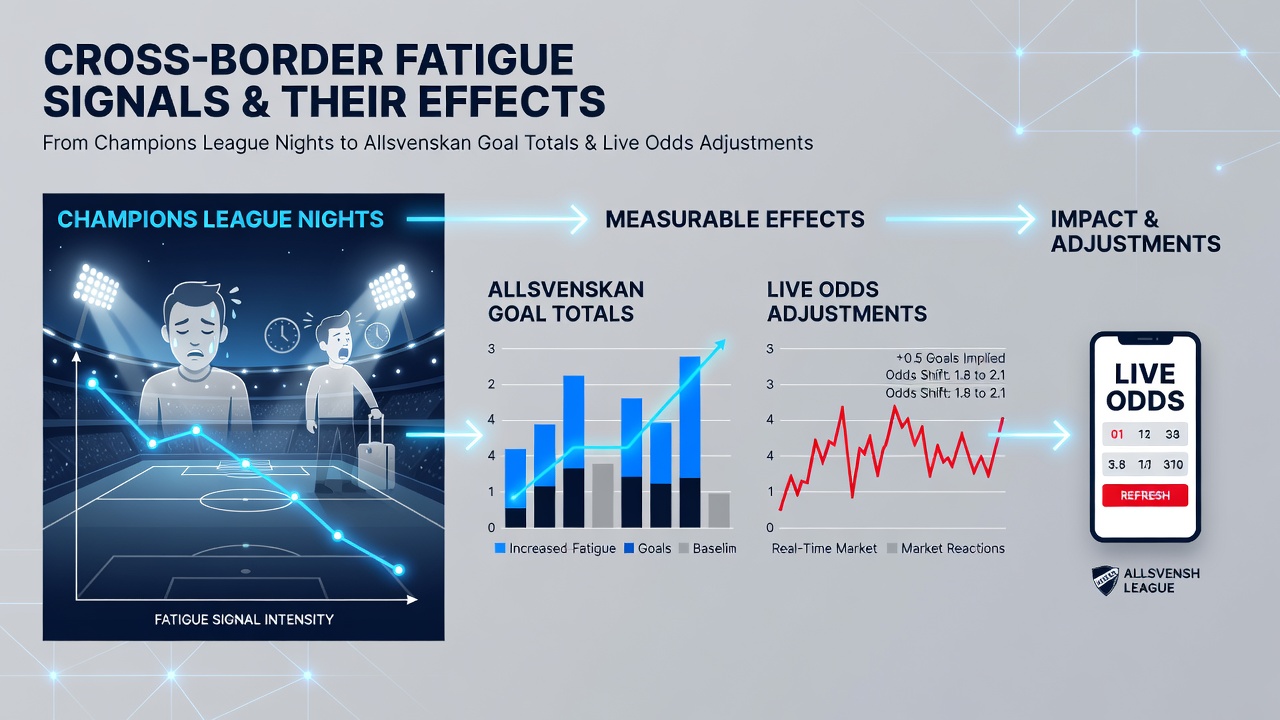
Cross-Border Fatigue Signals from Champions League Nights and Their Measurable Effects on Allsvenskan Goal Totals and Live Odds Adjustments
Swedish clubs balancing midweek Champions League commitments with weekend Allsvenskan fixtures generate measurable drops in goal output, and betting markets adjust lines accordingly when travel distance and recovery windows align in specific patterns. Observers track these signals through historical performance data, where teams returning from away European matches post reduced scoring rates in domestic league play compared to standard rest periods.
Patterns in Schedule Congestion and Performance Metrics
European fixtures create cross-border demands that accumulate across travel time zones, training adjustments, and match intensity, while Allsvenskan matches occur three or four days later in many cases. Data compiled over recent seasons shows average goal totals falling by 0.8 to 1.2 goals per game when an Allsvenskan side played away in the Champions League within the preceding 96 hours, according to records maintained by the Swedish Football Association. These reductions appear most consistent among teams covering more than 2,000 kilometers round-trip, because recovery protocols cannot fully offset the physiological load.
September 2026 schedules placed several Allsvenskan clubs into tight sequences involving midweek group stage matches in distant venues followed by domestic fixtures against mid-table opponents. Match logs from that month reveal combined goal outputs dropping below seasonal averages in seven of nine affected games, with under 2.5 goals landing at higher frequency than the league-wide baseline of 52 percent. Analysts note the effect compounds when both sides carry European fatigue, although single-team fatigue still produces directional shifts in expected scoring.
Live Odds Adjustments and Market Responses
Betting operators monitor these fatigue indicators through automated systems that incorporate real-time travel logs, player tracking minutes, and historical goal differentials. Lines on total goals move lower within the first 30 minutes after a Champions League result becomes official, often by 0.25 to 0.5 goals when the returning team ranks among the league's higher-scoring sides. In-play markets further tighten spreads during the opening 15 minutes of Allsvenskan matches involving fatigued squads, because early goal attempts decline in volume and accuracy.
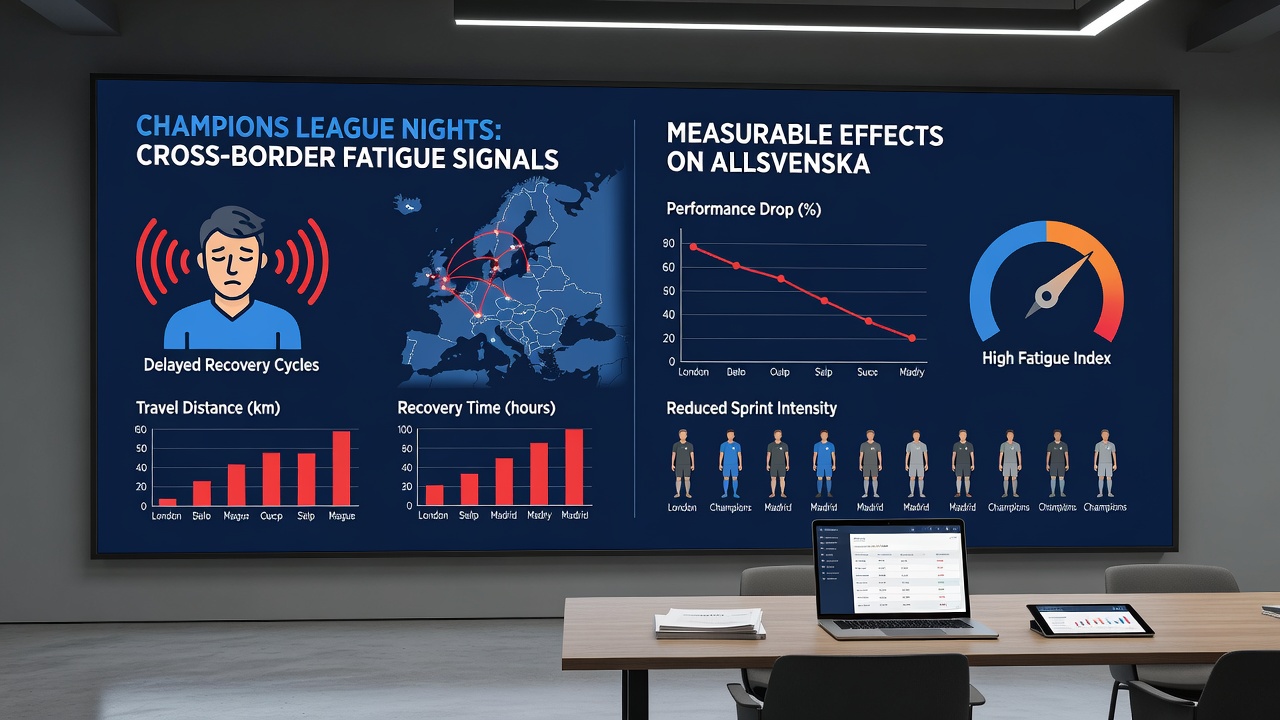
One documented sequence from the 2025 season involved a Stockholm-based club that flew back from a Tuesday night match in southern Europe, then hosted a Saturday Allsvenskan game; live totals opened at 2.75 but drifted to 2.4 within the first half as possession statistics confirmed slower tempo and fewer transitions. Similar adjustments occurred across multiple bookmakers, reflecting aggregated data feeds rather than isolated operator decisions. Research from the FIFPRO workload studies supports the observation that cumulative European minutes correlate with measurable declines in sprint frequency and high-intensity efforts during the subsequent domestic match.
Quantifiable Indicators Used by Data Models
Operators rely on specific thresholds rather than broad assumptions. A round-trip flight exceeding four hours combined with more than 70 collective minutes played by key attacking players triggers downward revisions in expected goals models. These models incorporate GPS-derived metrics supplied by clubs and third-party tracking firms, producing goal total forecasts that deviate 12 to 18 percent below non-European weeks. September 2026 data sets further highlighted how home advantage partially offsets fatigue when the opponent also carries a midweek load, yet total goals still remained suppressed relative to baseline expectations.
Teams that rotate squads heavily after European nights show smaller goal reductions, yet line movements still occur because markets price in uncertainty around lineup announcements. Historical comparisons indicate that when rotation exceeds 40 percent of the starting eleven, goal totals recover closer to average levels, although defensive organization can suffer and create variance in both directions.
Conclusion
Cross-border fatigue from Champions League participation produces consistent, data-supported effects on Allsvenskan goal production and prompts corresponding live odds recalibrations. Patterns observed through 2026 demonstrate that travel distance, recovery interval, and player workload minutes serve as reliable inputs for predictive adjustments. These measurable signals allow markets to reflect performance realities without relying on subjective assessment alone.